 tolapay
Prepaid wallets and spend limits: the billing model AI products in Nepal actually need
Why credits beat invoices for token- and minute-metered products, how low-balance alerts and hard limits protect both sides, and how to run it on local rails.
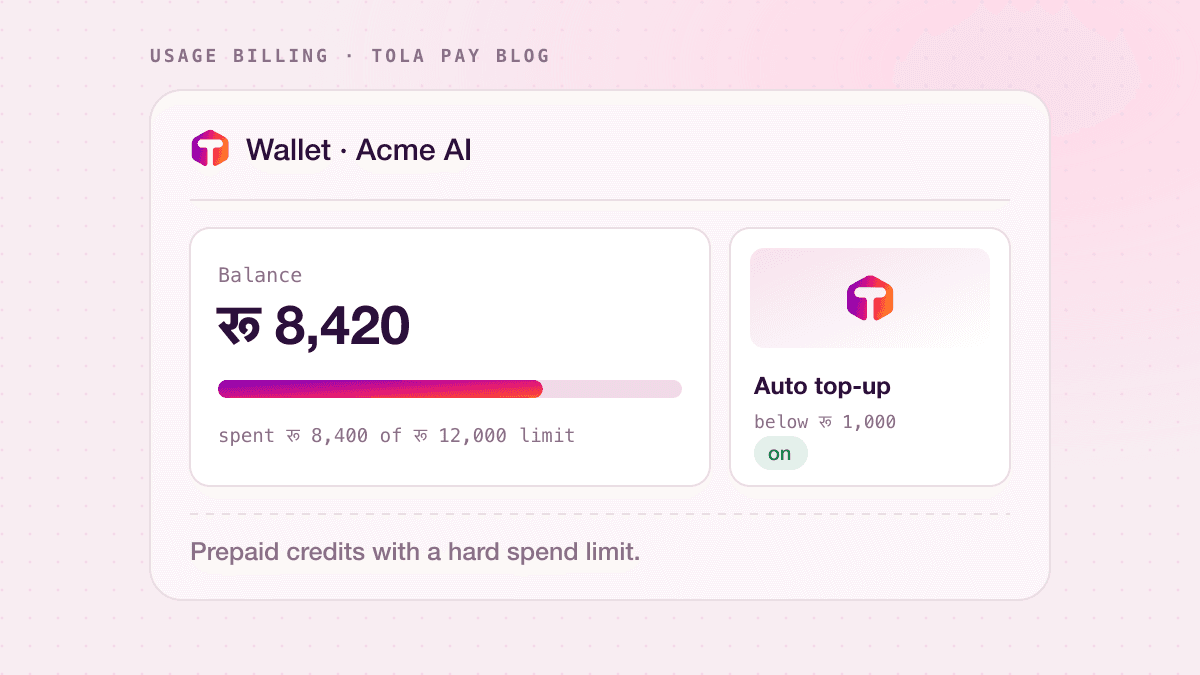
AI products have a cost problem that classic SaaS never had: every request costs you real money the moment it happens. Billing a month later, by invoice, means financing your customers' usage — and chasing them if they don't pay.
Credits flip the risk
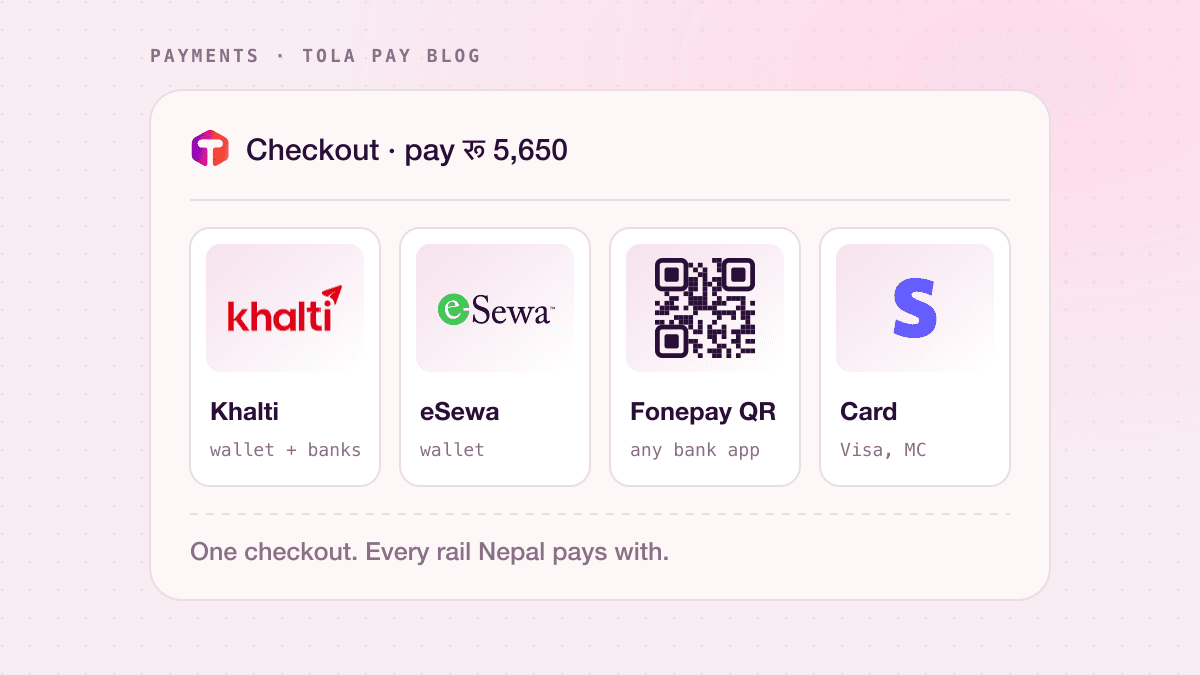
A prepaid wallet means the customer pays first and consumes second. You never carry their inference bill; they never get a surprise invoice. Top-ups run through the same checkout as everything else — Khalti, eSewa, cards or bank transfer — so the model works for a student and a bank alike.
Alerts and hard limits
Set a low-balance threshold and both sides get an email with a top-up link. Set a hard limit and metering stops at zero instead of running a tab. Both are one setting per customer or plan.
Hybrid with a subscription
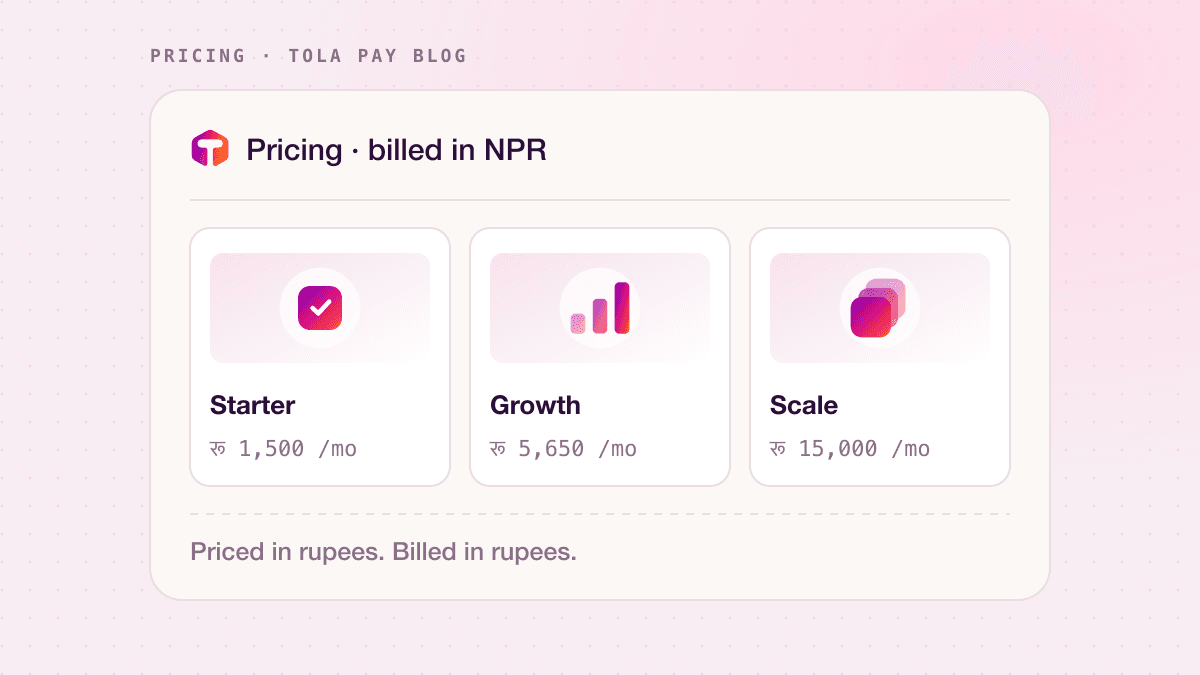
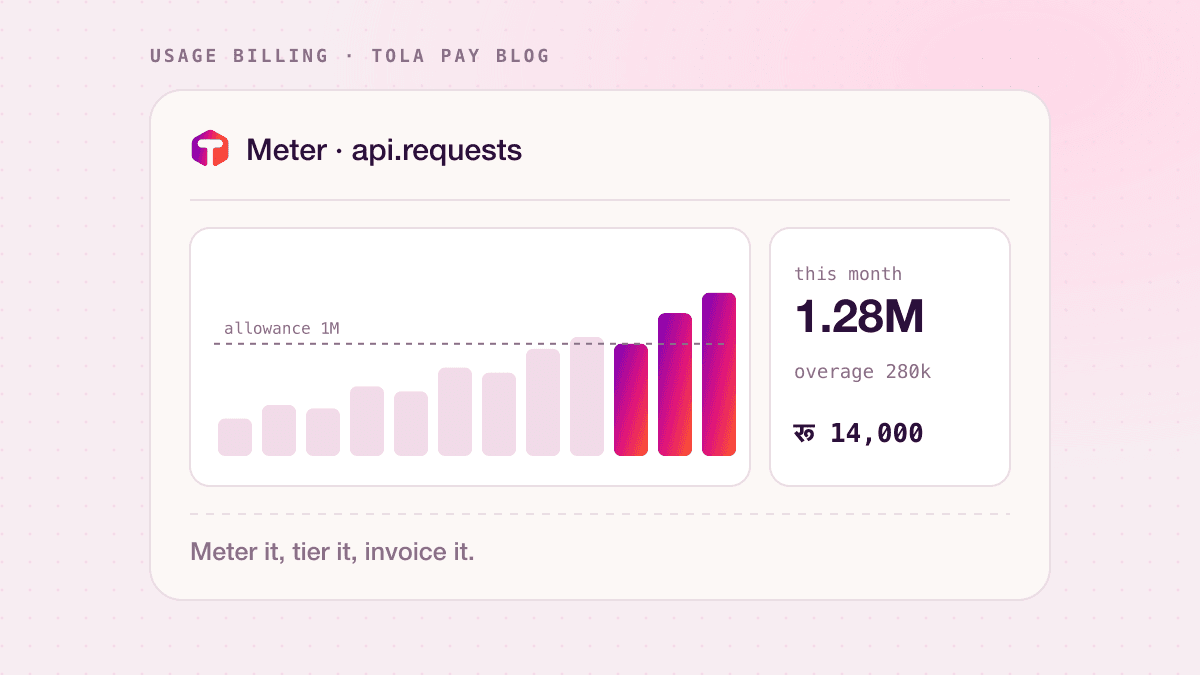
Many teams combine a small monthly plan (for access and support) with a wallet for usage. The plan renews by invoice link or auto-charge; usage draws from the wallet; anything beyond the balance rolls to the next invoice. One customer, one ledger.
What to watch
Expiry rules for unused credit, refunds, and how credit shows on the VAT invoice. Decide these before launch; they are much harder to change after.
 Pricing · 15 Oct 2026
 Usage billing · 11 Oct 2026
 Payments · 28 Oct 2026